Your MRI Says "Brain Tumor": What Happens Next and When Should You See a Neurosurgeon?
Few phrases in medicine cause as much fear as "possible brain tumor" showing up on an MRI report. It's natural to wonder what the finding actually means, whether it's cancer, and what happens from here.
Here's the important part to hold onto: an MRI finding isn't automatically a final diagnosis. An abnormal area can have several possible causes, and
what it looks like on a scan has to be weighed against your symptoms, your medical history, a neurological exam, and other tests. This is exactly the kind of situation where neurosurgery in Newport Beach can step in with a proper evaluation.
If your MRI has raised this kind of concern, neurosurgery can give you the specialized evaluation needed to understand what was found and whether treatment is actually necessary.
What should you do after an unexpected MRI result?
Start by reviewing the MRI report with the doctor who ordered the scan. Ask what was found, exactly where it's located, and whether the radiologist recommended further testing.
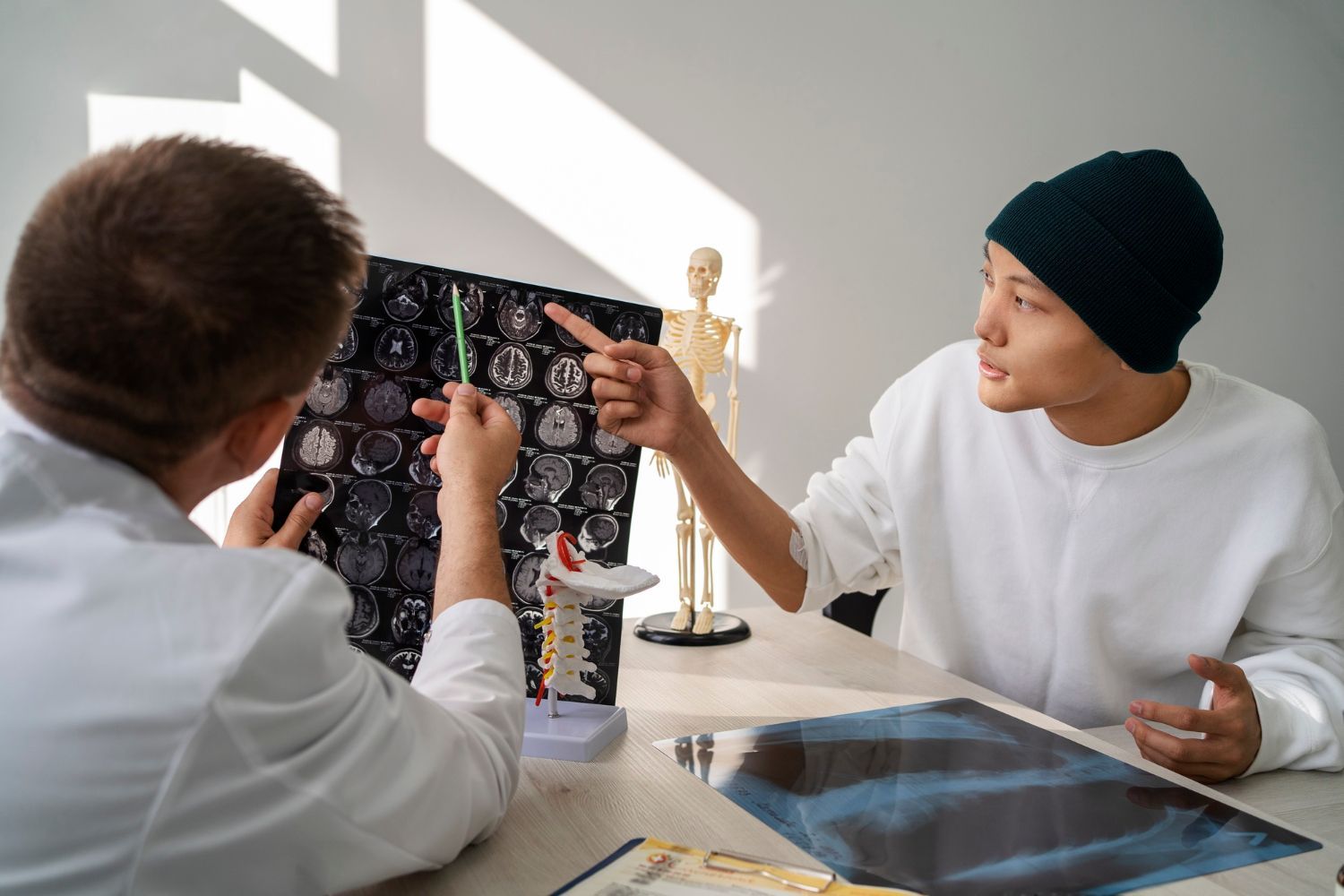
Get a copy of the actual MRI images too, not just the written report. Images let a specialist examine the finding directly instead of relying on someone else's summary.
When a possible tumor turns up, neurosurgery in Newport Beach may be the right next step, so a neurosurgeon can look at the imaging directly and decide whether surgical expertise is even needed. Don't assume surgery is automatically on the table. In most cases, the first real goal is just figuring out what you're actually dealing with.
When should you see a neurosurgeon?
A neurosurgical consultation usually makes sense when an MRI shows a mass or another suspicious lesion, especially one that might be affecting an important area of the brain.
Consider seeing a neurosurgeon if you have:
- A newly identified brain mass
- Persistent or worsening neurological symptoms
- Seizures
- Changes in vision, speech, strength, or coordination
- Significant changes in memory or behavior
- A lesion that appears to be growing
- A tumor located near an important brain structure
At neurosurgery in Newport Beach, the evaluation should go beyond just asking whether a tumor can be removed. The bigger question is whether treatment is needed at all, and if so, which approach best balances treating the problem against protecting healthy brain function.
What happens during a neurosurgical consultation?
Your first appointment usually focuses on getting the full picture.
Your neurosurgeon may ask when your symptoms started, whether they've changed, and how they're affecting your day-to-day life. A neurological exam often follows, checking things like strength, sensation, coordination, balance, and speech.
Then the MRI gets reviewed carefully, in detail.
Robert Louis, MD, takes the time to explain findings in language patients can actually follow. Patients deserve to know not just what was found, but why a particular recommendation is being made in the first place.
Depending on what the MRI shows, you might be advised to get another scan after some time has passed, undergo more testing, or start talking through treatment options.
Does every brain tumor require surgery?
No. Treatment depends on several things, the type of tumor, its size, its location, how fast it's growing, your symptoms, and your overall health. Some
tumors get monitored with regular imaging instead of treated right away, especially when they're small, slow-growing, and not causing real problems.
Others do need surgery. It might be recommended to remove as much of the tumor as safely possible, relieve pressure on the brain, ease symptoms, or get a tissue sample for a definite diagnosis. For some patients, surgery is only one piece of the plan, depending on the diagnosis, care can also involve radiation, medication, chemotherapy, or other specialized treatment. That's why neurosurgery in Newport Beach should start with a thorough evaluation, not the assumption that an operation is coming next.
When is a brain tumor an emergency?
Most MRI findings don't mean you need emergency surgery, and that holds true even for many referrals to neurosurgery in Newport Beach. But certain symptoms deserve immediate medical attention, no matter what the imaging showed.
Seek emergency care for a new seizure, sudden loss of consciousness, a severe or rapidly worsening headache, sudden weakness or numbness, major trouble speaking, severe confusion, or a sudden change in vision or balance. If you already know you have a brain lesion and your symptoms suddenly shift, contact your medical team right away.
What should you bring to your appointment?
A little preparation makes the consultation much easier to follow.
Bring your MRI images and radiology report, plus a list of your medications and any relevant medical records. Write down your symptoms and when they started. If you're dealing with headaches, seizures, weakness, balance issues, or vision changes, note how often they happen and whether they seem to be getting worse.
Come with questions ready, such as:
- What does the MRI show?
- Could this finding have another cause?
- Do I need additional testing?
- Do I need a biopsy?
- Is surgery necessary?
- What are the risks of treatment?
- What happens if we just monitor the lesion instead?
Asking these questions is how you stay an active participant in your own care.
Why early specialist evaluation can matter
Finding a possible brain tumor isn't a reason to panic, but it's not something to sit on either. A specialist can help figure out whether the finding calls for observation, more testing, or treatment.
For patients looking into neurosurgery in Newport Beach, an experienced evaluation can bring real clarity to the diagnosis and the options on the table. Robert Louis, MD, understands that patients often show up with more questions than answers, and the goal of every consultation is making sure you leave understanding what the imaging means and what choices you actually have.
Conclusion
An MRI that mentions a possible brain tumor can feel overwhelming, but the report is only the beginning of the process, not the end of it. The next step is understanding the finding, evaluating your symptoms, and figuring out whether further testing or treatment makes sense.
A consultation for neurosurgery in Newport Beach doesn't automatically mean you're headed for an operation. It gives you the chance to have your imaging and symptoms reviewed by someone who can actually explain the situation and walk through your options.
If your MRI has flagged a possible brain tumor, don't try to interpret the report on your own. Bring your questions, your imaging, and your medical records to a qualified specialist. Robert Louis, MD, and the wider team behind this work, are there to help you get real answers and make an informed decision about your care.