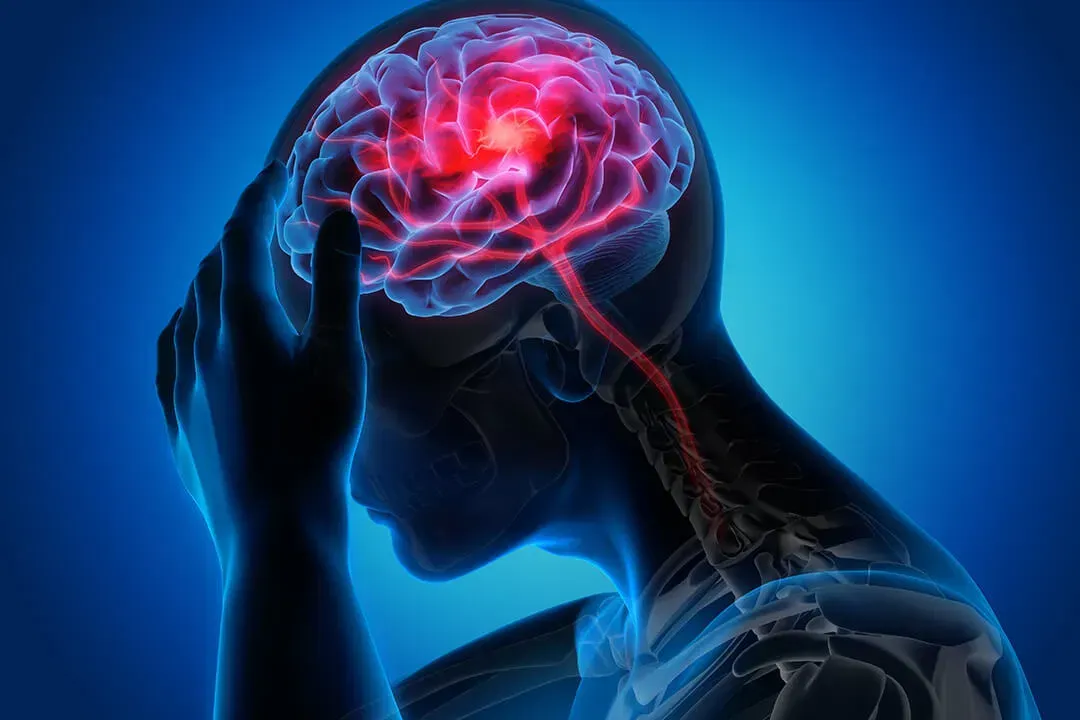
Epidermoid cyst

Epidermoid Cyst

An epidermoid cyst is congenital, rarely acquired, and forms at fetal development during the 3rd to 5th week of pregnancy when normal developmental cells are trapped within the growing brain. This slow-growing cyst can occur in many parts of the brain, but mostly in the cranial base. The cranial base is a highly complex and anatomically challenging region, comprising the base of the cranium, the ventral surface of the brain and brainstem, and the nerves, arteries, and veins entering and exiting the skull.

CAUSE

Epidermoid cranial cysts are caused by either being born with skin cells trapped inside the skull during development (congenital) or by acquired factors like trauma or surgery that introduce skin cells into the brain cavity.

Symptoms

Depending on the location and size of the epidermoid cyst, the symptoms may vary:


  • Persistent headaches
  • Blurred or double vision or involuntary eye movement
  • Hearing problems (ringing in ear, hear loss)
  • Dizziness or vertigo
  • Seizures
  • Difficulty walking
  • Balance issues
  • Trigeminal neuralgia (Sharp pain on side of face)
  • Facial Nerve Weakness
  • Dysphagia (Swallowing difficulty)
  • Slurring
  • Weakness or paralysis in a part of the body
  • Taste sensation (bitter, sweet, metallic, salty)
  • Limb Sensation (tingling in arm/leg)
  • Numbness on the face)
  • Changes in personality
  • Fatigue or lethargy, especially in children

Diagnosis

Initial treatment will involve Robert Louis, MD conducting thorough medical history and physical exam, including the patient’s symptoms and health history.


To help diagnose and confirm presence of epidermoid cyst, special imaging will be requested such as an MRI or CT scan.


After diagnostic tests are done, Dr. Louis will review all of the results with you and discuss to weigh up the pros and cons of surgical intervention.

Treatment

The only available treatment for symptomatic epidermoid cyst is surgical resection which may be done through endoscopic endonasal approach (EEA), keyhole craniotomy,  or conventional craniotomy depending on the location of the lesion.


Determining the optimal treatment plan takes a number of factors into consideration, including the patient’s preferences, general health, and size of the epidermoid  cyst. Robert Louis, MD specializes in minimally invasive keyhole brain surgery approaches that are highly individualized to suit every patient’s needs.

CONTACT US

Please feel free to fill out the form provided on the right with your questions and Dr. Louis and his team will get back to you as soon as possible.

Contact Us