
CAUSE
Pituitary Adenoma
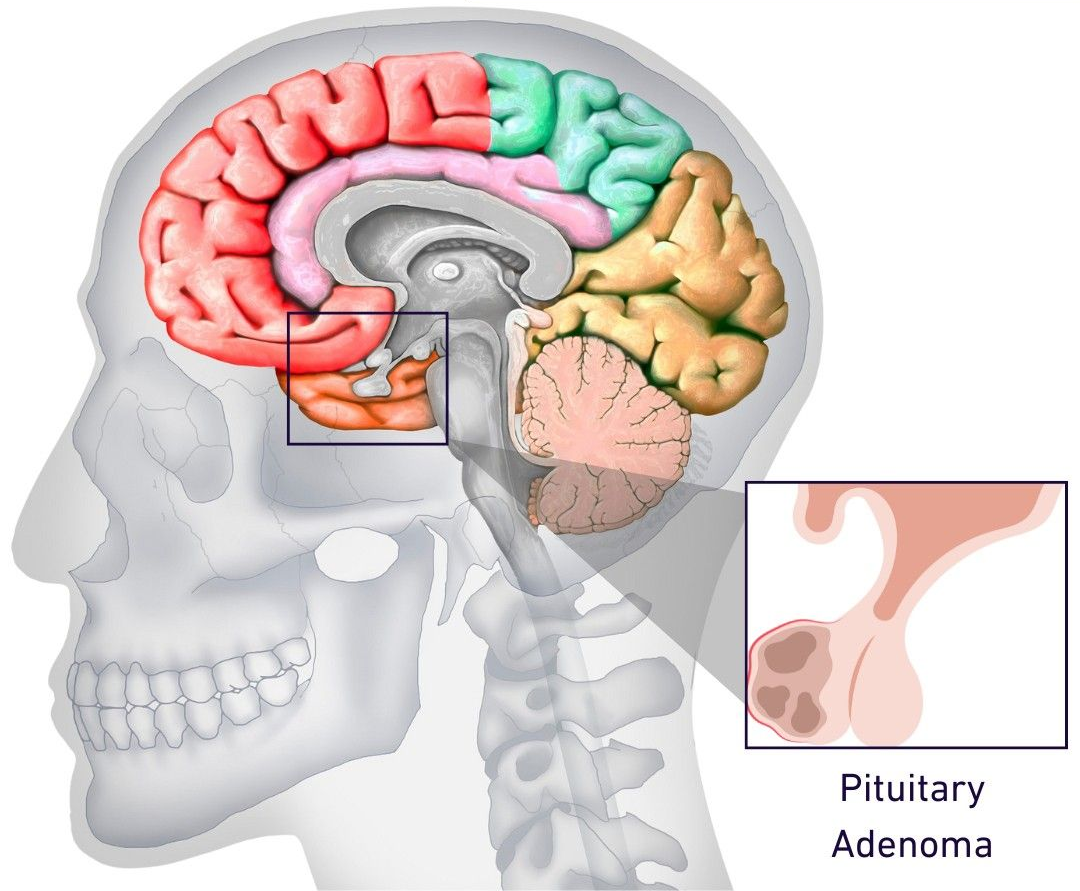
A pituitary adenoma is uncommon and non-cancerous. It is a benign tumor that develops on the pituitary gland, found inside the skull just above the nasal passages. Pituitary cancers are called pituitary carcinomas and are extremely rare. Pituitary adenomas are classified according to size:
Microadenomas – are tumors that are smaller than one centimeter across. They rarely press on other tissue, but they can cause symptoms if they release too much of a certain hormone into the bloodstream.
Macroadenomas – are larger than one centimeter across. Macroadenomas can also affect hormone production and they are large enough to press on nearby tissue or nerves, causing damage.

Most pituitary adenomas are not inherited and develop spontaneously. The pituitary gland is composed of different types of hormone-producing pituitary cells that get released into the bloodstream, affecting other organs in the body. Pituitary adenomas arise from one of these specialized cells. Tumor cells that cause overproduction of hormones are called functional adenoma. Functional adenomas include:
Prolactinoma – a tumor that overproduces prolactin
Acromegaly – caused by an excess growth hormone
Cushing’s disease – caused by a pituitary tumor stimulating an overproduction of cortisol

Symptoms
Symptoms of pituitary adenoma depend upon several factors, including whether the tumors are hormone-producing or clinically nonfunctioning. Not all adenomas exhibit symptoms, therefore it can be difficult to diagnose early. Non-functional or functioning pituitary adenomas often grow until they become macroadenomas, which can press on surrounding tissues and nerves, and affect hormone function. The following symptoms may be experienced by patients with pituitary adenomas:
Syndromes from overproduction of hormones in functioning adenomas:
- Acromegaly
- Cushing's Disease
- Hyperprolactinemia
- Hyperthyroidism
- Prolactinoma
Symptoms related to Macroadenoma
- Vision loss
- Loss of the outer peripheral vision
- Loss of visual acuity (blurry vision)
- Colors are not perceived as bright as usual
- Loss of pituitary function
- Headaches
- Double vision
Symptoms for pituitary insufficiency
- Hypopituitarism
- Reduction of sex hormones
- Low testosterone level for men
- Decreased sexual drive and impotence
- Loss of body and facial hair
- Infertility for women
- Loss of menstrual periods
- Hypothyroidism
- Death can occur in severe case
- Stunted growth and delayed puberty for children
- Tiredness, loss of muscle mass, and tone
- Headache
- Heat and cold intolerance
- Unexplained weight loss or gain
- Excessive thirst and urination

Diagnosis
To diagnose pituitary adenoma, Robert Louis, MD, who has experience and training in diagnosing acromegaly, will conduct thorough medical history, and physical tests for the existence of acromegaly in patients. Standard diagnostic tests include:
- Hormone testing
- Visual field testing
- MRI

Treatment
Pituitary adenoma treatment will depend on multiple factors, including the size and location of the tumor, age, and overall health condition of the patient. Surgical removal of pituitary adenoma is the best chance for a cure. If the tumor invaded surrounding tissues, however, there is a lower chance of a surgical cure. In that case, you may be recommended to undergo other treatment options, such as medication or radiation therapy. Treatment options for pituitary adenoma include:
Minimally Invasive Endoscopic Transsphenoidal Surgery
Orange County neurosurgeon Robert Louis, MD, specializes in minimally invasive endoscopic transsphenoidal surgery for the removal of pituitary adenoma. This sophisticated procedure removes the tumor while minimizing complications, hospital time, trauma, and discomfort. Dr, Louis has the specialized skills and training with this advanced technique. Read more about
Endoscopic Transsphenoidal Surgery.
Medication
Sometimes use of medication, and not surgery may be the best initial course of treatment. However, in most cases, patients require a combination of medical and surgical treatment to remove pituitary adenoma.
Gamma Knife Radiosurgery
Is a highly effective, non-invasive treatment for pituitary adenomas.
CONTACT US
Please feel free to fill out the form provided on the right with your questions and Dr. Louis and his team will get back to you as soon as possible.


Contact Us
Thank you for contacting us.
We will get back to you as soon as possible.
We will get back to you as soon as possible.
Oops, there was an error sending your message.
Please try again later.
Please try again later.
