
CAUSE
Meningioma
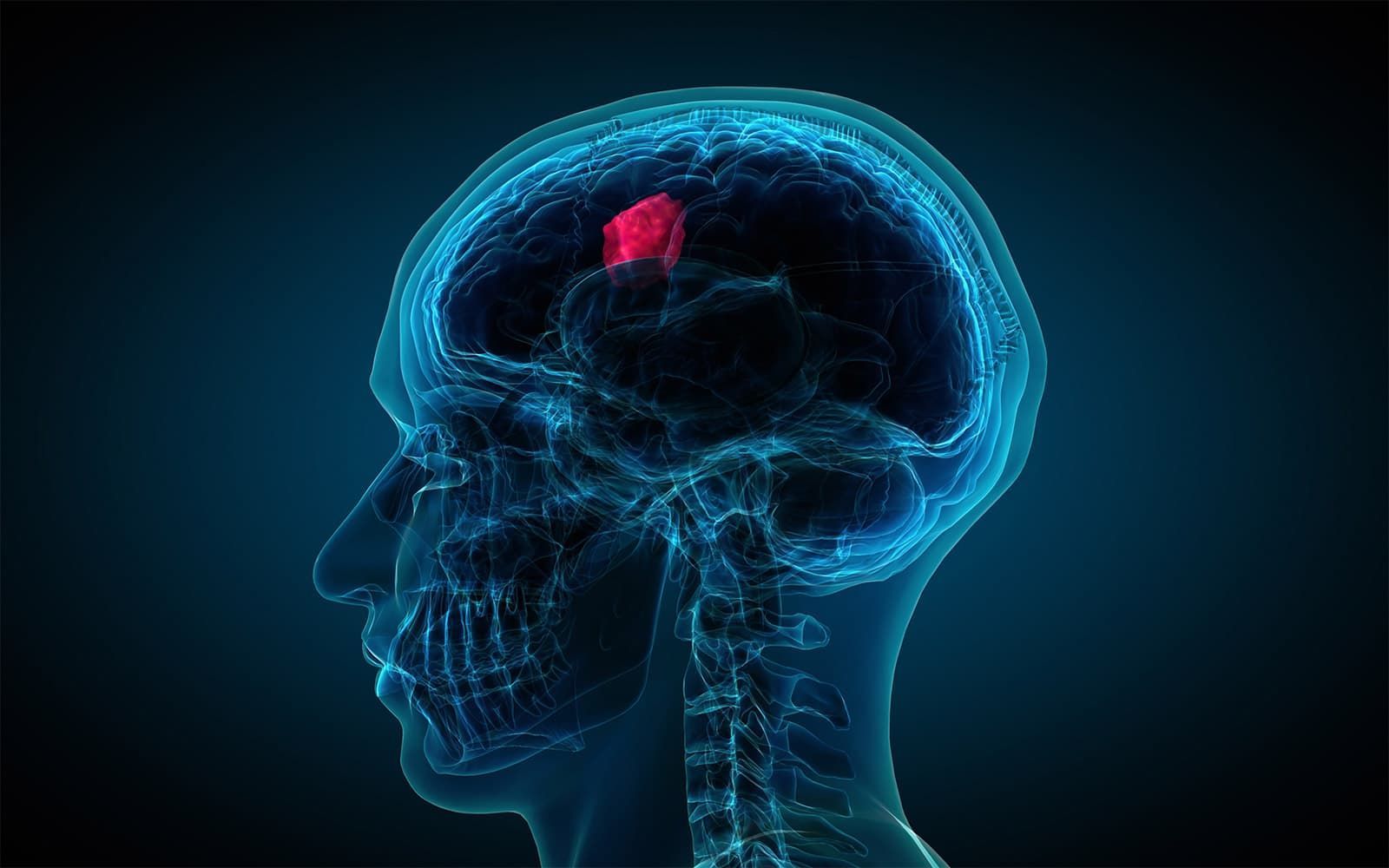
Meningioma is a tumor that forms on the layer of membranes that cover the brain and spinal cord just inside the skull. Meningiomas press against the brain or spinal cord. It is estimated that 85 percent of meningiomas are benign or non-cancerous and slow growing. Most meningiomas can be completely removed surgically, while some may not need immediate treatment and can often remain undetected for many years.

There is no obvious cause of meningioma. But studies show that meningioma occurs three times more in women than in men. Other risk factors that increase the chance of developing meningioma are:
- Receiving radiation therapy on the head to treat an infection of the scalp, or tumors of the head, neck or brain
- People suffering from neurofibromatosis type 2, a rare and inherited nervous system disorder, often get benign tumors of the nerves throughout the body.

Symptoms
Symptoms of meningioma appear slowly as it develops slowly. It causes symptoms only when it’s pressing on the brain or spinal cord. Most meningiomas are found incidentally on imaging or scans of patients while seeing a doctor for other conditions. Symptoms are location-dependent. The most common symptoms of meningioma are:
- Headaches
- Seizures
- Blurry vision
- Weakness in the arms or legs
- Numbness
- Loss of balance
- Hearing loss
- Memory loss

Diagnosis
Initial treatment will involve thorough medical history and physical exam, including the patient’s symptoms, and personal and family health history. To help detect meningioma, Robert Louis, MD conducts a neurological exam to test a patient’s vision, hearing, balance, coordination, reflexes, memory, and ability to think.
To help Dr. Louis diagnose and find the exact location of meningioma, he may perform tests and order special imaging such as an MRI.
After diagnostic tests are done, Dr. Louis will review all of the results with you and describe the best treatment options.

Treatment
Treatment options for meningioma by your brain surgeon, Robert Louis, MD, will depend on the location of the meningioma, the patient’s overall health condition, and whether the meningioma is benign or malignant.
Observation: For a small meningioma that does not cause symptoms, observation is the best option to monitor its growth or development. If the meningioma remains benign or non-malignant and is not developing, the patient may never need any surgical treatment or therapies.
Keyhole Surgical Approaches: Surgery remains the most common and may only be the only treatment needed for meningioma, especially if it’s benign and located in a place where it can be accessed and removed.
Endonasal Endoscopy: A technique that allows an endoscope to be threaded through the nose and sinus to reach and remove the meningioma in various areas of the brain.
Supraorbital Eyebrow Craniotomy: An incision is made within the eyebrow to access the meningiomas located in the front of the brain or around the pituitary gland.
Retromastoid Craniotomy: Done through an incision at the back of the ear to access and remove meningioma.
Radiation Therapy: When it is not possible to operate or remove the meningioma completely and safely because it’s located in a part of the brain that can’t be operated on, radiation is the best treatment option.
Robert Louis, MD who has particular expertise and extensive experience in minimally invasive removal of meningioma which is proven to be safer and more effective. Less invasive keyhole surgical approaches incorporate Dr. Louis’ experience and education with cutting-edge technology and instrumentation.
Prior to surgery, each patient will receive a individualized surgical plan from Robert Louis, MD incorporating virtual and augmented reality visualization to allow for the least invasive approach.
CONTACT US
Please feel free to fill out the form provided on the right with your questions and Dr. Louis and his team will get back to you as soon as possible.


Contact Us
Thank you for contacting us.
We will get back to you as soon as possible.
We will get back to you as soon as possible.
Oops, there was an error sending your message.
Please try again later.
Please try again later.
