Trigeminal Neuralgia

Trigeminal Neuralgia

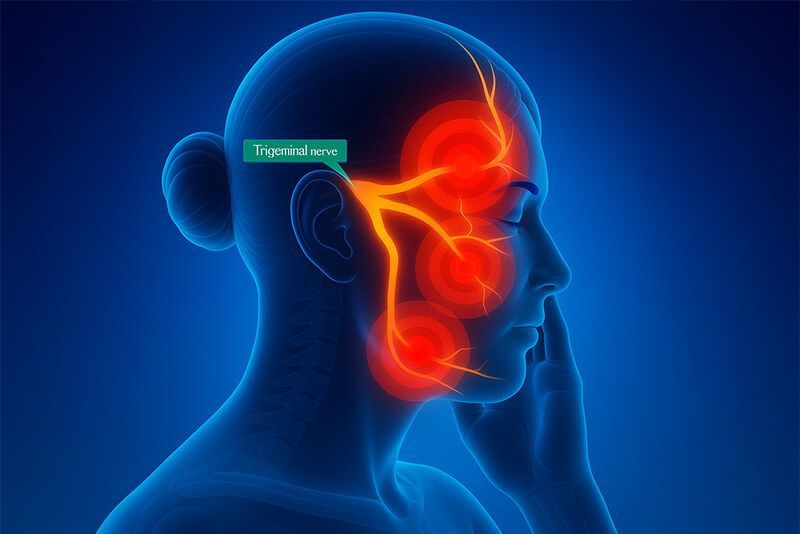
Trigeminal neuralgia is a chronic pain condition caused by dysfunction of the major nerve trigeminal nerve, which carries sensation from your face to your brain. There are numerous causes of trigeminal neuralgia, the most common of which is a blood vessel compressing the trigeminal nerve as it leaves the brain. Trigeminal neuralgia is treated with microvascular decompression (MVD) using a minimally invasive keyhole approach to separate the trigeminal nerve from impinging blood vessels.

Trigeminal Neuralgia-cause

CAUSE

Trigeminal neuralgia is caused by irritation of the trigeminal nerve most commonly by compression from a normal blood vessel of the brain. It can also be related to multiple sclerosis or rarely a tumor compressing the trigeminal nerve.

Trigeminal Neuralgia-symptoms

Symptoms

Trigeminal neuralgia symptoms may include one or more of the following:


  • Severe shooting or jabbing pain that may feel like an electric shock
  • Spontaneous attacks of pain or attacks triggered by touching the face, chewing, or speaking
  • Irregular painful attacks lasting days, becoming more frequent and intense over time
  • Pain in areas supplied by the trigeminal nerve: cheek, jaw, teeth, gums, lips
  • Pain affecting one side of your face at a time
Trigeminal Neuralgia-diagnosis

Diagnosis

Your Orange County neurosurgeon Dr. Louis will carefully review your medical history and perform a neurological exam. An MRI scan may be ordered to rule out other conditions such as a brain tumor, aneurysm, or AVM that may be causing facial nerve compression.


FIESTA (Fast Imaging Employing Steady-state Acquisition) MRI: is a special MRI setting that gives doctors a clear, detailed view of nerves and fluid-filled spaces, helping them spot small or subtle problems.

Trigeminal Neuralgia-treatment

Treatment

The first line treatment is oral medications which is typically one of serval anti-seizure medications. These work for some patients, but many patients will refractory symptoms. If symptoms become refractory to medical care or patients cannot tolerate the side affects of the medications, intervention may be required. Then a  minimally invasive keyhole approach for microvascular decompression (MVD) will allow Dr. Robert Louis, your Orange County neurosurgeon, to move or separate the blood vessel and hold it away from the irritated nerve using tiny cushions. MVD is performed using a microscopic retromastoid approach to create a small quarter-sized bony opening behind the ear.,


Minimally Invasive Keyhole Approach

Robert Louis, MD performs this operation is performed through a quarter-sized bony opening using microscopic techniques and augmented reality. This keyhole approach preserves the surrounding normal structures as best as possible. Depending on the nerve affected, various other therapies may be indicated. By incorporating cutting-edge technology and instrumentation with proven surgical experience, we make surgery safer, less invasive, and more effective. Read more about Retromastoid Approach.


Gamma Knife Radiosurgery 

Is a highly effective, non-invasive treatment for Trigeminal Neuralgia.

CONTACT US

Please feel free to fill out the form provided on the right with your questions and Dr. Louis and his team will get back to you as soon as possible.

Contact Us