

Acromegaly

Acromegaly

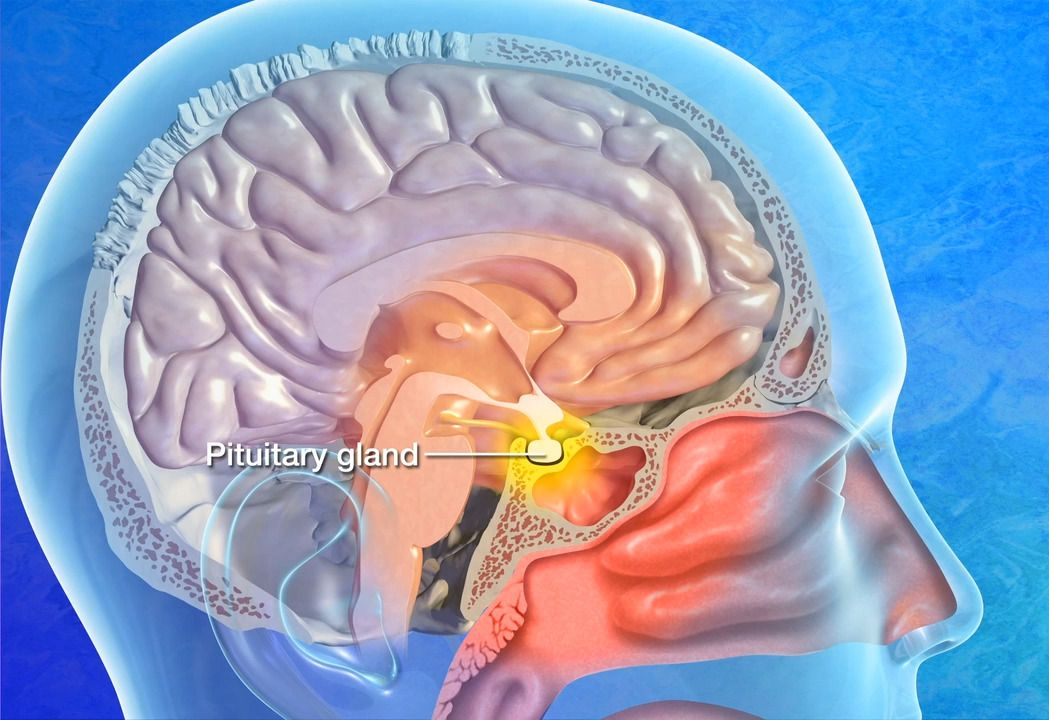
Acromegaly is a rare hormonal disorder that often develops when your pituitary gland produces excess growth hormone during adulthood. The scientific term acromegaly literally means enlarged extremities. Acromegaly usually affects middle-aged adults.

Acromegaly-cause

CAUSE

Acromegaly is caused by prolonged overproduction of growth hormone (GH) by a pituitary tumor.

Acromegaly-symptoms

Symptoms

Acromegaly is associated with various symptoms due to the excess of hormones in the body, which may include:

  • Abnormal enlargement of the hands and feet
  • Changes in facial features (enlarged nose, lips, tongue, etc.)
  • Widened fingers or toes, with swelling, redness, and pain
  • Widely spaced teeth
  • Joint pain, limited joint movement, swelling of the bony areas around a joint
  • Dizziness
  • Deepening of the voice in males
  • Oily skin and excessive sweating
  • Increased number of skin tags
  • Carpal tunnel syndrome
  • Arthritis
  • Headache
  • Sleep apnea
  • High blood pressure
  • Diabetes
  • Loss of visual acuity
  • Heart diseases due to heart enlargement
Acromegaly-diagnosis

Diagnosis

To diagnose pituitary adenoma, Robert Louis, MD, who has experience and training in diagnosing acromegaly, will conduct thorough medical history, and physical tests for the existence of acromegaly in patients. Standard diagnostic tests include:


Hormone testing:  Dr. Louis will order blood tests to specifically look for an elevated level of IGF-1. In premenopausal women, the GH levels can be high even though the IGF-1 levels are normal, an estrogen-resistant phenomenon.


Oral glucose tolerance test (OGTT):  You may be asked to undergo an oral glucose tolerance test (OGTT) to confirm the diagnosis. Drinking 75 grams of a glucose solution should lower the GH level to lower than one nanogram per milliliter. In acromegalics, this suppression does not occur and may in fact increase.


Magnetic resonance imaging (MRI): This is the preferred way to detect acromegaly, using a special MRI pituitary protocol to properly visualize the pituitary tumor.

Acromegaly-treatment

Treatment

Acromegaly treatment will depend on multiple factors, including the size and location of the tumor, age, and overall health condition of the patient. Treatment options include:


Minimally Invasive Endoscopic Transsphenoidal Surgery
This is the first line treatment for the vast majority of patients that have acromegaly. Orange County neurosurgeon Robert Louis, MD, specializes in minimally invasive endoscopic transsphenoidal surgery for the removal of acromegaly. This sophisticated procedure removes the tumor while minimizing complications, hospital time, trauma, and discomfort. Dr. Louis has specialized skills and training with this advanced technique. Read more about
Endoscopic Transsphenoidal Surgery.

Medications
Sometimes use of medication, and not surgery may be the best initial course of treatment. However, in most cases, patients require a combination of medical and surgical treatment to control acromegaly. Acromegaly medications are prescribed to help normalize or suppress growth hormone production and address symptoms of soft tissue swelling, headache, joint pains, and sleep apnea.


Gamma Knife Radiosurgery 

Is a highly effective, non-invasive treatment for acromegaly.

CONTACT US

Please feel free to fill out the form provided on the right with your questions and Dr. Louis and his team will get back to you as soon as possible.

Contact Us